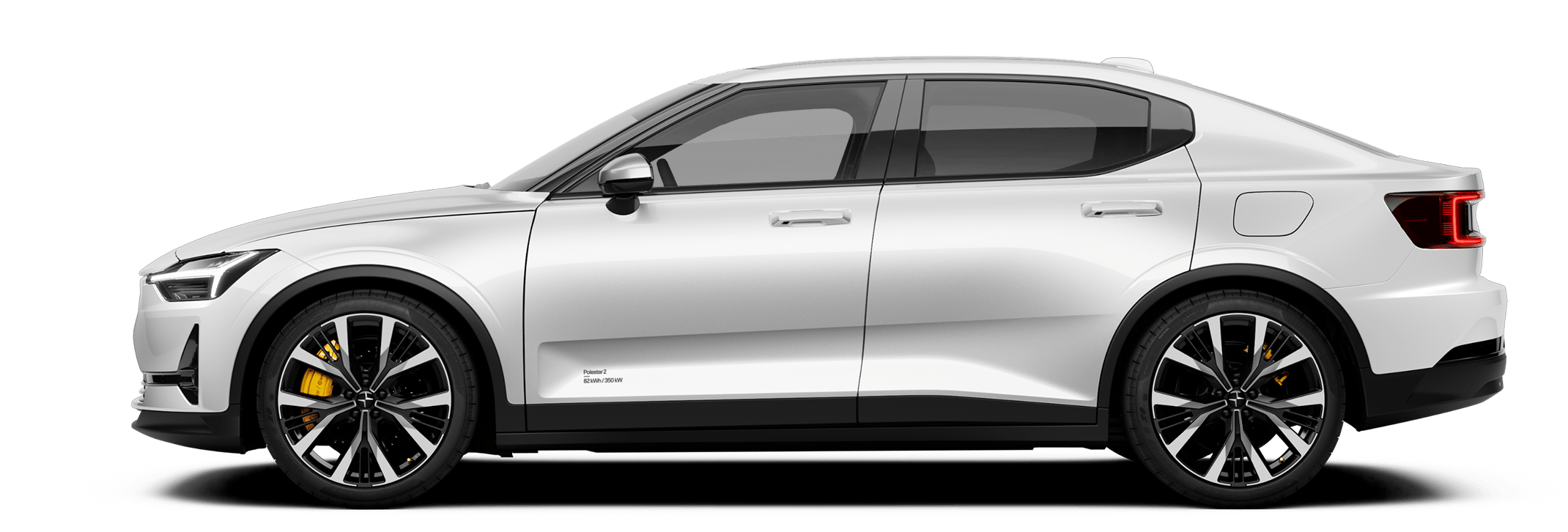
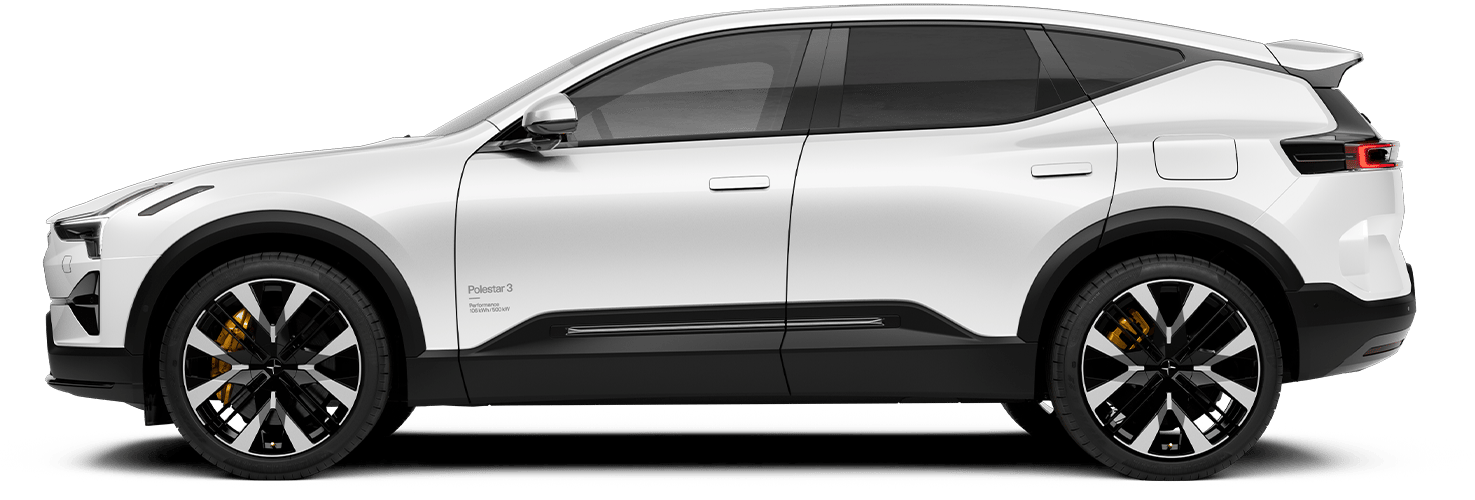
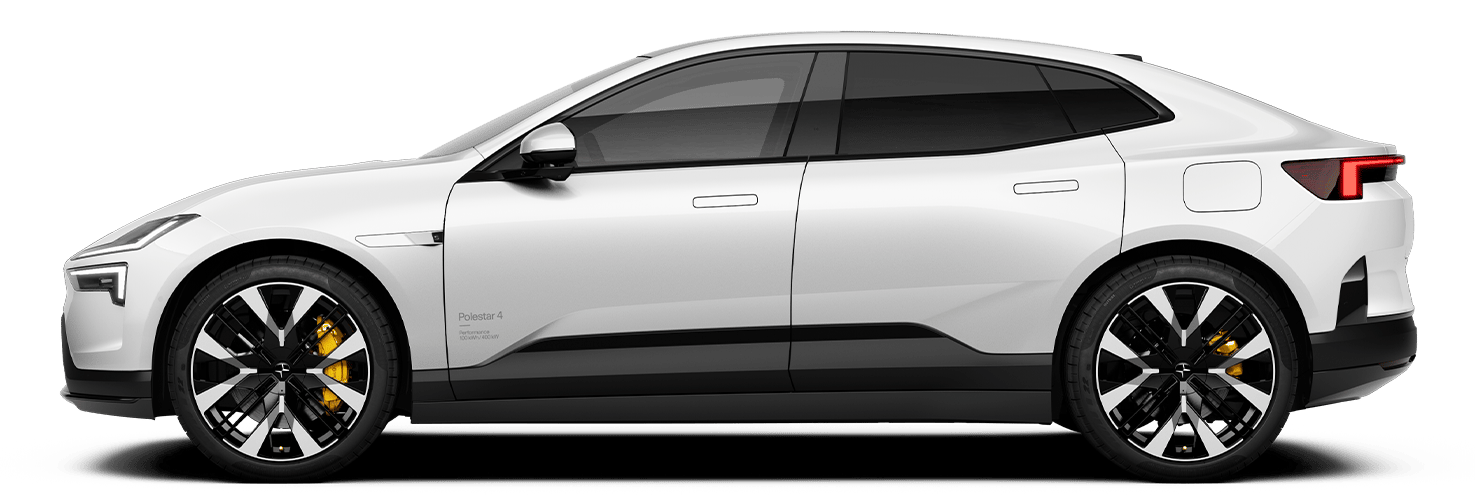
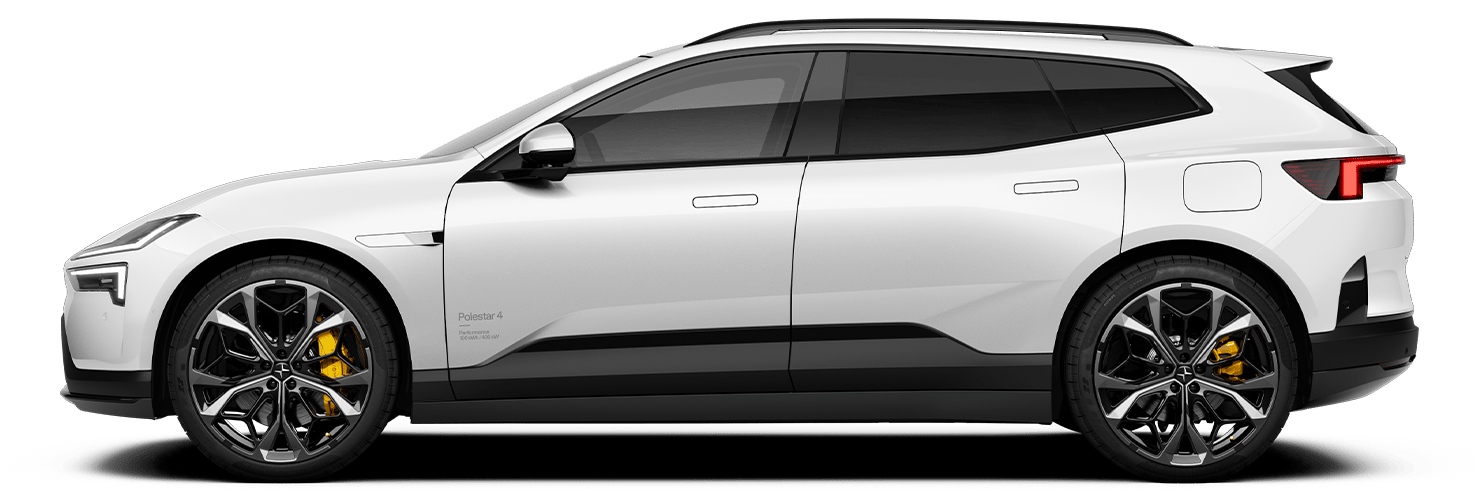
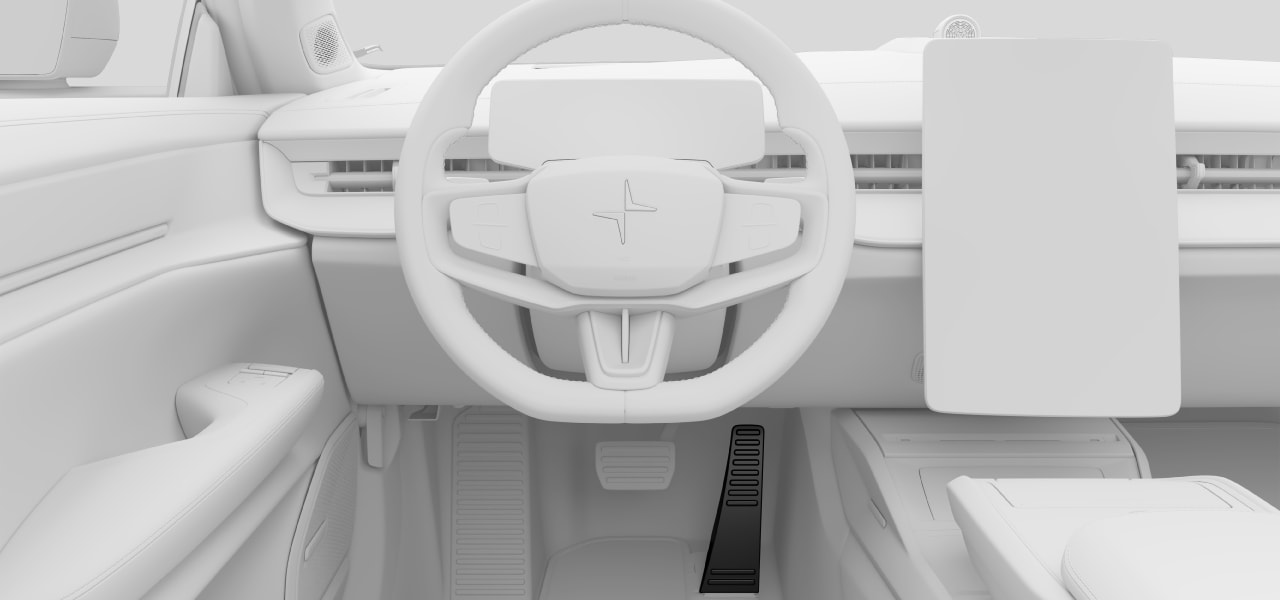
The braking behaviour changes through the use of the accelerator pedal. When you press the accelerator, the car accelerates as normal but releasing the pedal engages braking. The more you ease up on the pedal, the more braking action you get. By releasing the accelerator completely, you will eventually bring your car to a full stop.
One pedal drive prioritises regenerative braking but the disc brakes can be applied if the braking action demands it.
Warning
Keep the brake pedal in mind
There is a limit to the braking force that can be applied by releasing the accelerator when using One pedal drive. For hard braking you need to use the brake pedal.
One pedal drive settings
| Standard | The function is on. You can brake by releasing the accelerator. |
| Low | When you ease up on the accelerator, the car will brake with less force than in the standard setting. |
| Off | The function is off. Releasing the accelerator does not engage the brakes. |
Steering wheel controls
When you're not using adaptive cruise control or Pilot Assist, you can also adjust the braking force using the buttons on the left side of the steering wheel.
 | Increase One pedal drive braking force |
 | Decrease One pedal drive braking force |
Important
You can only use One pedal drive after selecting a driving gear, D or R. When N is selected, no braking force will be applied when you ease up on the accelerator, even if One pedal drive is enabled in settings.
Using One pedal drive is not recommended during slippery road conditions.
Note
Automatic disc brake engagement
One pedal drive primarily uses regenerative braking. Therefore, it’s possible that the disc brakes won’t be engaged for long periods of time. To keep them clean, dry and ready for use, the car will regularly engage the disc brakes along with regenerative braking during light braking manoeuvres.