Polestar 3 support

General questions about Polestar 3
Our aerodynamic electric performance SUV, Polestar 3, is manufactured in Ridgeville, South Carolina and in a production centre in Chengdu, China. Having production taking place on two continents allows us to better supply our key markets.
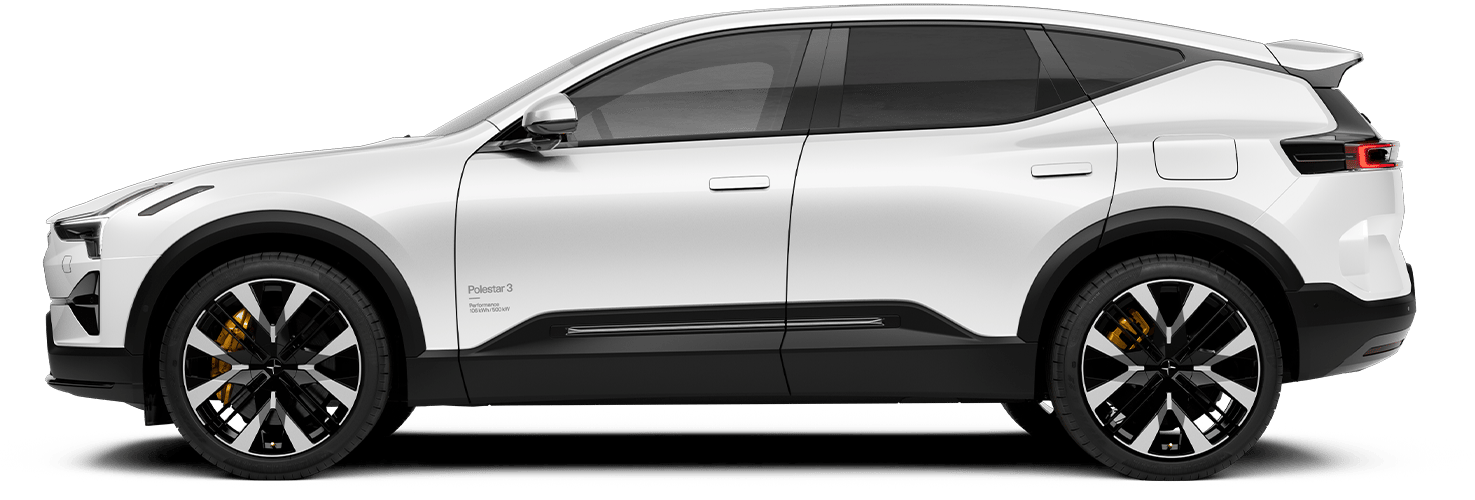
With Polestar 3, we present the first Polestar SUV. This is a performance-oriented SUV that has a sleek, wide body with a low roofline and aerodynamic profile. Therefore, it is not suited to a 7-seat configuration. We pushed the second-row seats further back to create extra leg room, which, in combination with a fully flat floor creates a spacious rear passenger environment.
This refers to leather that we source from a supplier that complies with strict requirements on the welfare of the animals, both from industry bodies and ourselves. Our requirements are based on the so-called Five Freedoms e.g. freedom from hunger and thirst. The supplier is Bridge of Weir in Scotland. Bridge of Weir sources raw hides locally from responsible suppliers with 100% traceability, as certified by Leather Working Group. You can read more here, at bridgeofweirleather.com/sustainable-sourcing.
When we source leather, we also include other strict sustainability requirements such as:
Traceability: first down to the slaughterhouse and then down to farm level.
Origin: leather cannot come from areas with deforestation risk, such as the Amazon rainforest.
Environmental practices: for example, the tanning process must be chrome-free. The leather in our vehicles is of the highest standard and renowned in the industry as state of the art.
Two cameras mounted on the dashboard monitor the driver’s eyes. The driver's eye movements are tracked for signs of distraction, drowsiness/sleep, or distress. Visual and audio warnings are triggered depending on what the system detects. These signs can even be detected if the driver is wearing a pair of glasses. If necessary, an emergency stop procedure can be initiated to safely stop the car, and an emergency distress signal can also be issued to alert emergency services to a detected problem. The cameras operate on a closed-loop system, meaning no data is stored or shared beyond the car and its safety systems.
Polestar 3 comes with Pilot Assist when equipped with the Pilot pack option, which provides advanced driver assistance at speeds up to approximately 150 km/h (where permitted). Safety, for passengers and other road users, is the primary focus when activating these systems.
When Pilot Assist is active, Polestar 3 can also change lanes with the Lane Change Assist feature, which is also included in Pilot pack. Moving the indicator stalk fully up or down initiates the manoeuvre, and the car will only proceed if the system’s sensors indicate it’s safe. You can see this by the arrows left and right showing on the yellow Pilot Assist steering wheel.Polestar 3
Adaptive Cruise Control: enabled at speeds up to 180 km/h
Pilot Assist: enabled at speeds up to 150 km/h
Please note that these features are designed to assist the driver. It is the driver's responsibility to remain in control of the vehicle at all times.
No, the 800 V architecture and technology require new hardware and is not possible to retrofit to earlier vehicles. It is a complete powertrain upgrade and not software alone.
From MY26 Polestar 3 disengages its front Asynchronous motor when in Range or Performance mode. This is all automatically done the Polestar 3 automatically re-engages its front motor when all-wheel traction is needed, and this happens within milliseconds and is undetectable. It is always engaged when standing still to ensure traction on pull away. In Performance mode, the pedal mapping will feel a little more engaged and instant. As recommended in the owner’s manual turning ESC off will also provide better traction in slippery or icy surfaces.
The upgraded Polestar 3 uses an 800 V architecture. To achieve the car’s peak charging rate, you must charge on an 800 V charger that is capable of delivering up to 350 kW of charging power. Without this you will not be able to achieve the car’s peak charging rate. Other factors that can affect the peak rate when charging are things such as battery temperature, outside temperature, and the battery’s state of charge. (Top tip – most Fast charging stalls will have the specification on a plate on the back of the charging unit. That way you can determine if it’s a 400 V or 800 V station. If it’s not clearly stated on the front of the charging stall) On a 400 V charger the cars peak will be 400 V this is because Polestar 3 does not have switch between parallel or series.
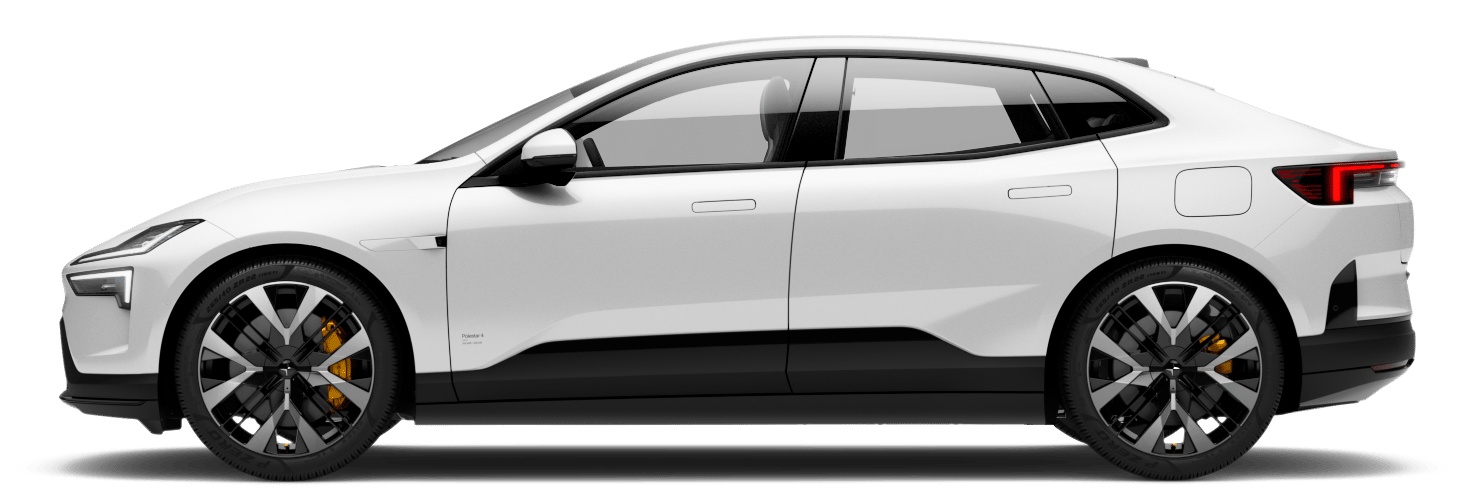
The industry standard is to measure luggage capacity up to the parcel shelf or luggage cover. Since Polestar 4 does not have one, due to the lack of a rear window, its default luggage measurement is up to the roof (526 litres, including 31 litres under the floor). The equivalent measurement in Polestar 3 is 567 litres, including 90 litres under the floor. In short Polestar 3 has a larger trunk by 71 litres.
This is down to the x2 less modules that the 92 kWh battery has. 14 modules vs the 16 modules in the 106 kWh Dual motor cars. The battery has a slightly lower peak due to the lesser modules and series set up.
Take control of your Polestar 3 in the app
Download the Polestar app to control your car remotely and get smart notifications or software updates.
Download the app
Still have questions?
Visit us
Visit a location near you to look at the latest cars, talk in person or go for a test drive.
Polestar Community
Engage with community members and Polestar directly, and access announcements and updates.
Talk to a local specialist
Get in touch with our team of knowledgeable Polestar specialists.