
Polestar 4 Sustainability credentials
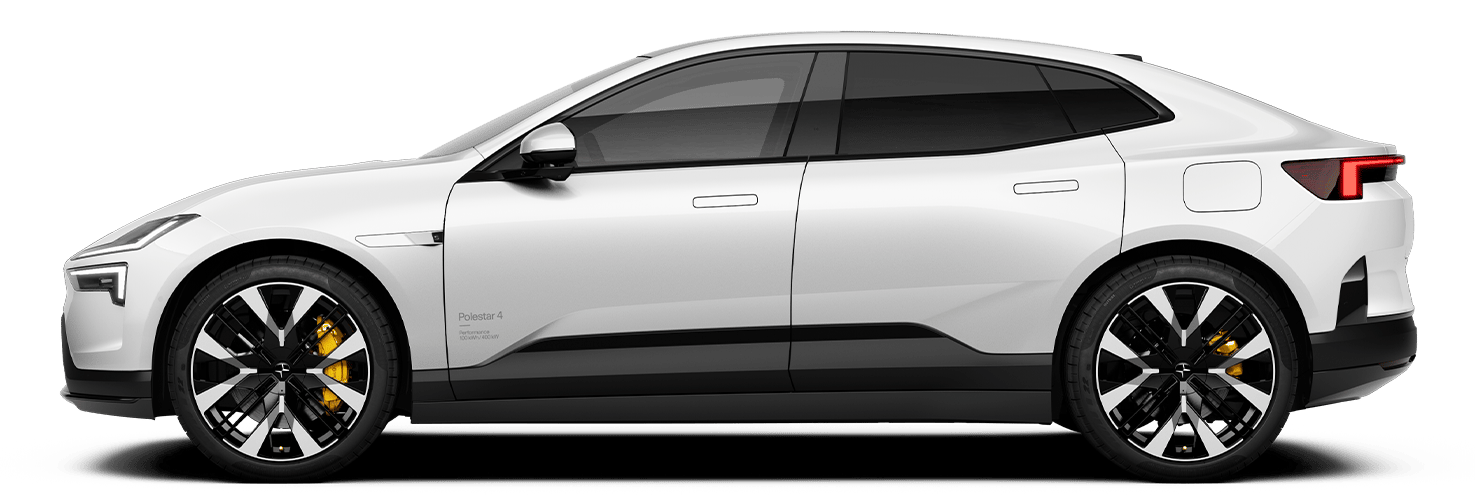
This is a high-level presentation of Polestar 4's sustainability credentials. It aims to provide transparent information to enable informed, ethical choices.
This is a high-level presentation of Polestar 4's sustainability credentials. It aims to provide transparent information to enable informed, ethical choices.

Cradle-to-gate refers to the environmental impact assessment of a car’s life cycle from the first raw material extraction to it leaving the factory. Polestar 4 has the smallest cradle-to-gate carbon footprint of any Polestar to-date made possible by some of the stages mentioned below.
Cradle-to-gate refers to the environmental impact assessment of a car’s life cycle from the first raw material extraction to it leaving the factory. Polestar 4 has the smallest cradle-to-gate carbon footprint of any Polestar to-date made possible by some of the stages mentioned below.

From aluminium and steel to plastics, each material category contributes to Polestar 4's overall carbon footprint, as does the electricity mix used in material production and refining. We aim to continuously reduce the carbon impact and improve the accuracy of our footprint calculations.

Factors in the battery's carbon footprint calculation range from mining operations, to the energy used for cell production, to the aluminum in the battery casing. We aim to further reduce battery carbon footprint with future models and iterations of Polestar 4.

Polestar 4 is produced in Busan, South Korea. The Busan plant is partly powered by renewable electricity through the use of renewable electricity certificates. Polestar aims to increase the share of renewable electricity with the ambition of reaching a 100% renewable electricity supply beyond 2026.
Cradle-to-gate CO₂ᵉ emissions¹
Rear motor
Material production
11.6 metric tons
Battery modules
5.5 metric tons
Manufacturing and logistics
2.7 metric tons
Total¹
19.8 metric tons
Dual Motor
Material production
12.6 metric tons
Battery modules
5.5 metric tons
Manufacturing and logistics
2.7 t
Total¹
20.7 metric tons
Carbon footprint proportions²
Battery pack
30%
Aluminum
25%
Steel and iron
22%
Polymers
10%
Electronics
7%
Other materials
6%

The battery pack in Polestar 4 is crafted using renewable electricity, with aluminum that’s either recycled or produced using renewable energy. These efforts reduce the battery's overall carbon footprint.
Cradle-to-grave evaluations consider the full span of a car’s existence. Our Life Cycle Assessment quantifies the environmental effect of every stage of a Polestar’s manufacture and use. From the first drive, to everyday charging, to its final recycling.
Cradle-to-grave evaluations consider the full span of a car’s existence. Our Life Cycle Assessment quantifies the environmental effect of every stage of a Polestar’s manufacture and use. From the first drive, to everyday charging, to its final recycling.

On the road, Polestar 4 drivers can significantly reduce the car's overall carbon footprint by charging it with renewable energy sources such as solar or wind.

Over 85% of the Polestar 4 is recyclable, whereas several components can be reused or remanufactured. Increasing components' lifespan in this way can reduce waste and avoid the CO2 emissions associated with making new components.


More on our key drivers
Circularity
We continuously aim to make cars that last longer, with more recycled materials, as we move closer to a goal of full circularity.
Read moreClimate neutrality
The steps we're taking to meet our defining goal of becoming a fully climate-neutral car manufacturer.
Read moreInclusion
Within Polestar, equal opportunities and a culture of open communication. Within our supply chain, human rights above all.
Read more