The Perfect Line Challenge
Justine Dufour-Lapointe takes on a new kind of precision with the Polestar 4.
What defines a perfect line? In freeride skiing, the answer is never fixed.
A line is chosen in real time, shaped by terrain, instinct and commitment. It exists once, and then it disappears. For Justine Dufour-Lapointe, the pursuit of a perfect line has defined a career. An Olympic medallist and Freeride World Tour champion, she built her reputation on reading landscapes, making split-second decisions, and executing with absolute precision.
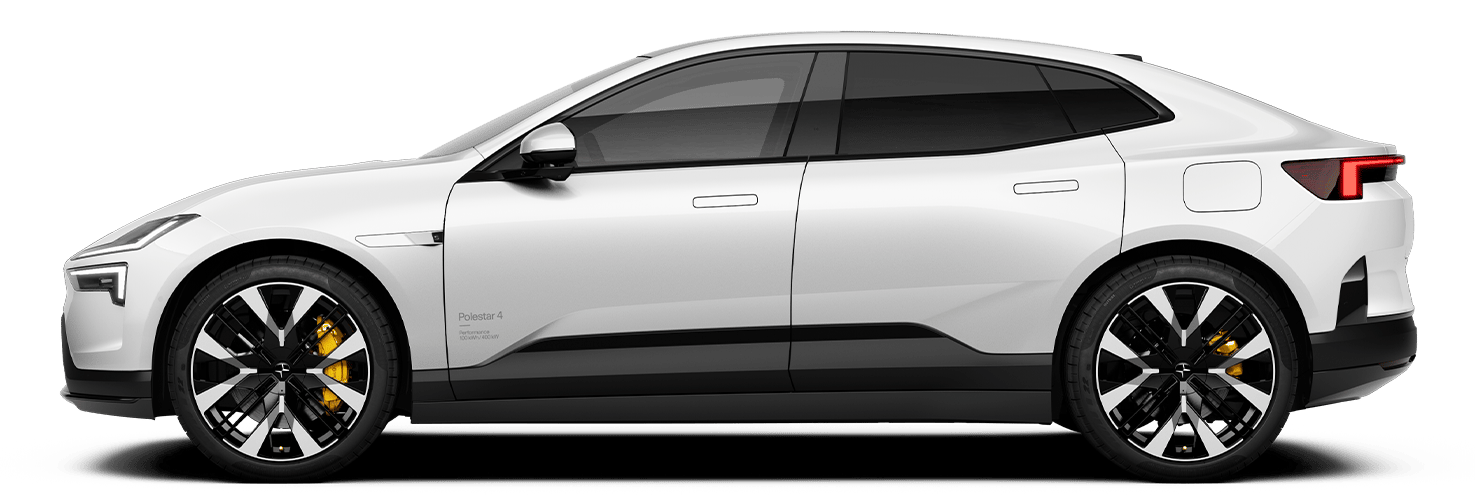
This time, that instinct was taken out of the mountains with the help of the Polestar 4, our SUV coupe designed to keep every movement controlled and composed.
Combining Justine’s experience with the car’s dynamic handling, we challenged her to recreate one of her most iconic freeride runs on a closed track.

The starting point was a single descent. A defining one. Her gold-medal–winning run at the Baqueira Beret Pro by Movistar in Spain. A line built on controlled speed, sharp direction changes, and fluid transitions. Every movement was captured and analyzed, turning instinct into data.
From there, the line was reconstructed. Each turn was translated into a physical layout. A pair of parallel lines traced the exact path of her descent, scaled to a driving environment. The mountain disappeared. The trajectory remained.
The rules were simple. Stay between the lines. Follow the path. No corrections. What had once been intuitive now demanded absolute discipline. That’s where the athlete and the technology met. With its low centre of gravity and chassis engineered for balance, the Polestar 4 translated that mapped line into controlled, consistent movement.

Despite the contrast between mountain and track, one principle remained constant: precision.
In freeride, precision enables speed without losing control. It transforms risk into flow. It’s what separates a good line from a winning one.
That same principle defines the Polestar 4. Designed as an electric SUV coupe, it prioritizes balance, responsiveness, and control. Steering input is immediate. A low centre of gravity supports stability through every turn. Power delivery is smooth and consistent, allowing for continuous, controlled movement. In this environment, precision isn’t an added feature. It’s the foundation.

As the final run came together, the distinction between snow and asphalt began to dissolve. What remained was the line itself.
For Justine Dufour-Lapointe, that run reinforced a simple idea: performance isn’t defined by where it happens. For Polestar, it affirmed another: design and engineering exist to enable that performance, wherever it takes place.
The terrain changes. The line doesn’t.
Experience Polestar 4 for yourself.


